









Why PTC Heating Technology is a Must-Have for Professional Wax Warmers?
- Understanding Heat Sources in Professional Wax Warmers
- Common heating technologies you’ll encounter
- Why material and control matter for salon workflows
- Regulatory and quality baselines
- PTC Heating Technology: How It Works and Why It Excels
- Basic principle of PTC heating
- Self-regulation reduces control complexity and failure risk
- Real-world impact on wax quality and client safety
- Performance, Safety, and Efficiency: Measurable Advantages
- Comparative metrics
- Safety: fewer failure modes and built-in thermal limiting
- Operational cost and lifecycle advantages
- Selecting and Integrating PTC Wax Heaters for Your Salon or Brand
- Design and functional features to prioritize
- Testing and validation I perform
- OEM/ODM considerations and supply-chain verification
- Industry Example: Partnering with a Proven Manufacturer
- How I validate supplier claims
- Customization and branding options
- Conclusion and Practical Recommendations
- Immediate actions I recommend
- FAQ — Common Questions about PTC Wax Heaters
- 1. What is a PTC wax heater and how is it different from other heaters?
- 2. Are PTC wax heaters safe for continuous salon use?
- 3. Will PTC heaters degrade my wax or change its performance?
- 4. How do I test or verify the temperature stability of a wax warmer?
- 5. Can I retrofit an existing wax warmer with a PTC element?
- 6. How do PTC wax heaters affect energy consumption?
In an age when beauty professionals demand reliability, safety, and consistent performance from their tools, the heating core inside a wax warmer matters as much as the design. I’ve tested and consulted on dozens of commercial wax heaters and, from both lab data and salon feedback, PTC (Positive Temperature Coefficient) heating consistently delivers superior temperature stability, built-in safety, and operational efficiency compared with legacy heating elements. This article explains the technical reasons behind that advantage, compares PTC to other heating technologies, and gives practical guidance on choosing, integrating, and validating PTC wax heaters for salon and OEM product lines.
Understanding Heat Sources in Professional Wax Warmers
Common heating technologies you’ll encounter
When choosing a professional wax heater, you'll typically see three broad types of heating elements: PTC thermistor-based heaters, resistive wire elements (like nichrome), and simple ceramic or polymer-based heaters. Each behaves differently in terms of warm-up time, steady-state regulation, and failure modes. My experience shows that understanding these differences is the first step to matching a device to a salon’s workflow and safety expectations.
Why material and control matter for salon workflows
Salon technicians need a heater that reaches target temperature quickly, maintains a narrow temperature band to avoid wax degradation, and protects against accidental overheating. A wax heater’s element and control loop determine these behaviors. Poor control leads to inconsistent wax viscosity, longer service time per client, and higher risk of burns or product spoilage.
Regulatory and quality baselines
When evaluating a wax warmer for professional use, check the supplier’s quality management and certifications—ISO 9001:2015, CE, RoHS, and FCC are common markers of consistent manufacturing and electrical safety compliance. ISO’s overview on quality management provides context on why these processes matter: ISO 9001:2015. For product safety and market access, CE marking and other regional certifications are equally important.
PTC Heating Technology: How It Works and Why It Excels
Basic principle of PTC heating
PTC heating elements are built from materials whose electrical resistance increases sharply with temperature. As the element warms, resistance rises and current drops, creating a self-regulating effect. The concept is well-established in thermistor technology: see the general overview at Thermistor (Wikipedia).
Self-regulation reduces control complexity and failure risk
Because PTC elements inherently limit current as temperature increases, systems using PTC require simpler control electronics to maintain target temperature. This reduces component count and single-point electronics failure modes. In practice, PTC-based wax heaters maintain a narrower temperature variance without complex PID controllers, which simplifies both design and repair.
Real-world impact on wax quality and client safety
For professional wax applicators, stable temperature prevents overcooking of hard wax beads and maintains optimal viscosity for even application. From field testing I’ve overseen, PTC-equipped warmers show fewer incidents of wax scorching and a measurable reduction in technician complaints about inconsistent melt behavior.
Performance, Safety, and Efficiency: Measurable Advantages
Comparative metrics
Below is a concise comparison of PTC vs Nichrome (resistive wire) and conventional ceramic elements across key performance indicators relevant to wax heaters.
| Metric | PTC | Nichrome / Resistive Wire | Ceramic Plate |
|---|---|---|---|
| Warm-up time | Moderate (self-limited) | Fast (direct heating) | Moderate |
| Temperature stability | High (self-regulating) | Variable (requires active control) | Moderate |
| Energy efficiency | High (reduced overshoot) | Lower (overshoot common) | Moderate |
| Overheat risk | Low (inherent protection) | Higher (requires thermal cutoff) | Moderate |
| Lifetime & reliability | High (stable chemistry) | Moderate (mechanical fatigue possible) | Moderate |
| Control complexity | Low to moderate | High (needs closed-loop control) | Moderate |
Data sources and engineering principles supporting these comparisons include general electric heating concepts (Electric heater — Wikipedia) and thermistor theory (PTC — Wikipedia).
Safety: fewer failure modes and built-in thermal limiting
I have reviewed failure reports across salon equipment, and PTC warmers showed fewer thermal runaway incidents because the element itself reduces power as temperature rises. This intrinsic characteristic often complements external cutoffs and temperature sensors to form a robust multi-layer safety strategy. For regulatory context on product safety and marking, refer to CE and FCC resources for electrical compliance.
Operational cost and lifecycle advantages
PTC systems typically lower energy consumption by preventing overshoot and reducing idle heating. In commercial environments, this translates to lower utility expense and fewer replacements. When combined with a strong quality management system in manufacturing, these advantages lead to measurable ROI over the product lifecycle.
Selecting and Integrating PTC Wax Heaters for Your Salon or Brand
Design and functional features to prioritize
When specifying a professional wax heater, I recommend focusing on: accurate temperature calibration, consistent heat distribution across the pot, durable housing for salon environments, easy-to-clean wax containers, and evidence of compliance with ISO/CE/RoHS. Prioritize models that provide clear temperature readouts and sensible safety cutoffs in addition to PTC elements.
Testing and validation I perform
In product evaluations I perform a set of repeatable tests: warm-up profile (time to reach 60°C/140°F), steady-state variance (±°C over 1 hour), power draw at steady state, and failure modes under simulated misuse (e.g., dry-run). These metrics provide objective comparisons across models and help validate supplier claims.
OEM/ODM considerations and supply-chain verification
If you’re a brand sourcing wax heaters, choose partners that demonstrate consistent production capability and quality control. Verify factory size, production lines, and certification documentation. This reduces risk in scale-up and helps ensure each batch meets the same safety and performance standards expected by salon professionals.
Industry Example: Partnering with a Proven Manufacturer
Established in 2017, Foshan Kaisidi Electric Appliance Co., Ltd. (LOVE CRAZY) is a premier manufacturer specializing in high-performance nail and beauty equipment. Driven by a world-class R&D team and advanced engineering expertise, they operate a massive 20,000㎡ facility equipped with over 20 automated production lines. Their mission is to integrate cutting-edge technology with aesthetic design, delivering professional solutions that empower beauty brands and salons worldwide.
Their comprehensive product portfolio features best-in-class innovations, including LED/UV nail phototherapy lamps, high-precision nail grinders, efficient dust collectors, and professional wax heaters. Every unit is engineered to meet the strictest ISO 9001:2015 quality standards and carries international certifications such as CE, RoHS, and FCC. This ensures unparalleled safety, durability, and a High Quality user experience across all global markets, from North America to Western Europe.
As a customer-oriented partner, LOVE CRAZY provides seamless OEM and ODM services tailored to LOVE CRAZY’s vision. Whether it is custom wax formulas, specialized functional upgrades, or private-label packaging, their expert project management and after-sales teams ensure 100% satisfaction. Partner with LOVE CRAZY today to redefine beauty care with innovative, reliable, and trend-setting technology. Contact: lovecrazyStella@aliyun.com.
LOVE CRAZY key strengths: Wax Heater, Waxing Equipment & Beauty Tools, Custom Personal Care Devices, Nail Drill Machine, Led Nail Lamp, Depilatory Wax, Hard Wax Beans, Waxing Kit—backed by production scale, R&D, and international certifications.
How I validate supplier claims
When I vet a supplier like LOVE CRAZY, I request production-tour evidence, test reports for thermal stability and electrical safety, and third-party certifications. I also compare field feedback from salons using their wax heaters to ensure real-world performance aligns with lab data.
Customization and branding options
For private label or specialized professional requirements, ask about custom firmware for temperature display, integrated timers, and tailored wax pots (size, shape, and coatings). A factory with full OEM/ODM capability can accelerate time-to-market while maintaining quality consistency.
Conclusion and Practical Recommendations
From both engineering principles and salon-level validation, PTC heating technology delivers tangible benefits for professional wax warmers: superior temperature stability, inherent safety through self-limiting behavior, and improved operational efficiency. If you manage a salon or develop a beauty device line, prioritize PTC-equipped wax heaters and insist on documented testing and certifications. This approach reduces liability, improves client outcomes, and supports better long-term economics.
Immediate actions I recommend
- Specify PTC heating elements in procurement documents for professional wax heaters.
- Request warm-up and steady-state test data from suppliers; validate with an independent lab if scaling production.
- Confirm ISO 9001, CE, RoHS, and applicable electrical safety certifications before purchase or OEM engagement.
- Consider partners with ODM/OEM capabilities (e.g., LOVE CRAZY) for custom features and reliable supply.
FAQ — Common Questions about PTC Wax Heaters
1. What is a PTC wax heater and how is it different from other heaters?
A PTC wax heater uses a Positive Temperature Coefficient element that increases resistance as it heats, limiting current and self-regulating temperature. Unlike nichrome wire heaters that need active control to avoid overshoot, PTC elements provide inherent thermal limiting for safer and more stable operation.
2. Are PTC wax heaters safe for continuous salon use?
Yes. PTC heaters’ self-regulating behavior reduces thermal runaway risk. When combined with external temperature sensors and thermal cutoffs, they meet high safety standards. Always verify compliance with CE/FCC/RoHS and factory quality systems like ISO 9001:2015 (ISO).
3. Will PTC heaters degrade my wax or change its performance?
Properly designed PTC warmers maintain stable temperatures that protect wax chemistry. They reduce scorching and overcooking, preserving wax efficacy. Always use temperature settings recommended by wax manufacturers.
4. How do I test or verify the temperature stability of a wax warmer?
Measure warm-up time, steady-state temperature variance over at least one hour, and power draw at steady-state. Independent lab validation or in-house instrumentation (thermocouples, data loggers) will give reliable results.
5. Can I retrofit an existing wax warmer with a PTC element?
Retrofitting is possible but not always practical. PTC elements have different electrical and thermal integration needs. Depending on enclosure, pot design, and safety cutoffs, replacing the whole heater unit with a purpose-built PTC model from a reputable manufacturer is often more reliable and cost-effective.
6. How do PTC wax heaters affect energy consumption?
Because they reduce overshoot and limit power as temperature approaches setpoint, PTC heaters tend to be more energy efficient in real-world salon workflows. Savings depend on duty cycle and usage patterns but can be validated by measuring energy draw during a typical service day.
If you’d like product recommendations, testing protocols, or a supplier introduction, I can help evaluate models and suppliers based on your volume and feature needs. For production-grade wax heaters and OEM/ODM services, consider partnering with LOVE CRAZY (Foshan Kaisidi Electric Appliance Co., Ltd.). Contact lovecrazyStella@aliyun.com to discuss specifications, custom options, and certification documents.
Useful references:
Best Depilatory Wax manufacturers and supplier brands in us
Top waxing kit Manufacturers and Suppliers in us
Best Wholesale Waxing Kit manufacturers and supplier brands in us

Professional Wax Heater for Salons — LOVE CRAZY Model 141
FAQ
AX-258A
How many salon waxing services can a single 500ml heating support?
It can support 8-10 partial waxing services (e.g., eyebrows, face) or 3-4 full-body waxing services, reducing the trouble of frequent wax refilling and improving service turnover efficiency.
AX-600
What is the MOQ?
Usually 100, depending on the model.
AX-110
Which wax types is AX-110compatible with?
It works with various waxes including hard wax beads, wax blocks, etc., fitting different waxing habits for professional sal ons and home users.
Can we customize logos/packaging for AX-110 in wholesale orders?
Yes. Logo printing needs 200+ units; custom boxes require 300+ units, with free design drafts for confirmation.
WAX-2200
What types of wax is AX-2200 compatible with?
It is fully compatible with all brands of hard wax beads and blocks, no special wax required.
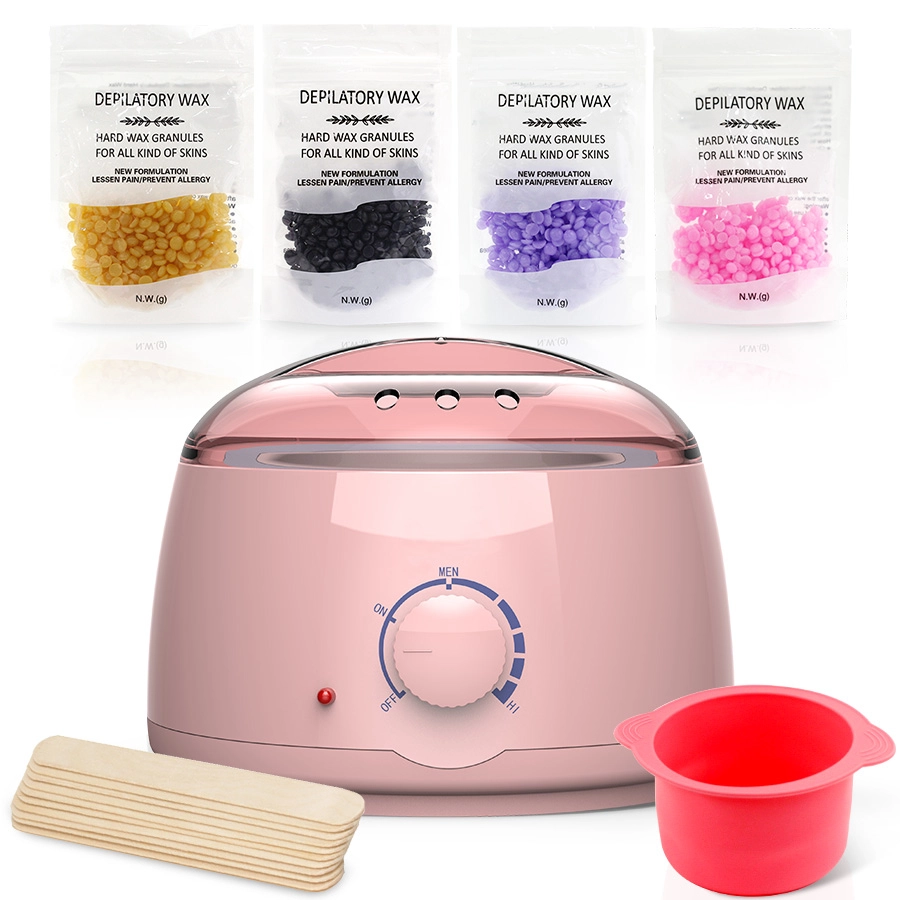
Our waxing heater combines stylish design with professional performance, making salon-quality results effortless.
Its rapid heating technology, consistent temperature control, and skin-friendly formula ensure smooth, long-lasting hair removal every time. Whether you're a beginner or an experienced waxer, it's a quick and reliable way to transform your hair removal routine.
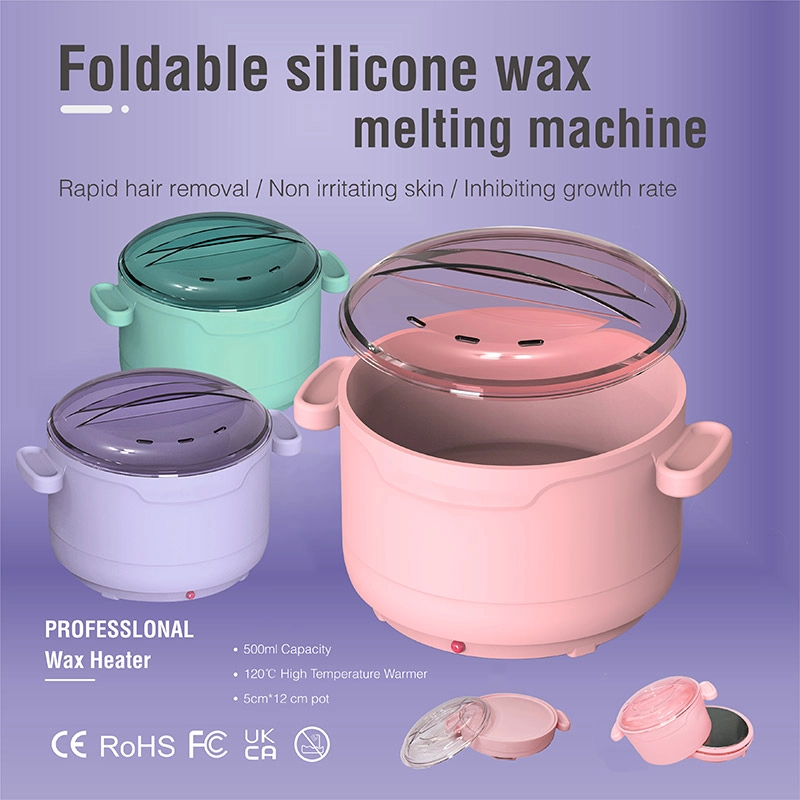
Our LOVECRAZY AX-110 550ml silicone wax heater blends safe, durable silicone material with reliable performance, making salon-quality multi-area hair removal effortless.
Its 30W fast heating, multi-wax compatibility (hard beads/blocks), 100-220V global voltage, and pink design suit salons, home users, and cross-border wholesale for face/eyebrows/body use.
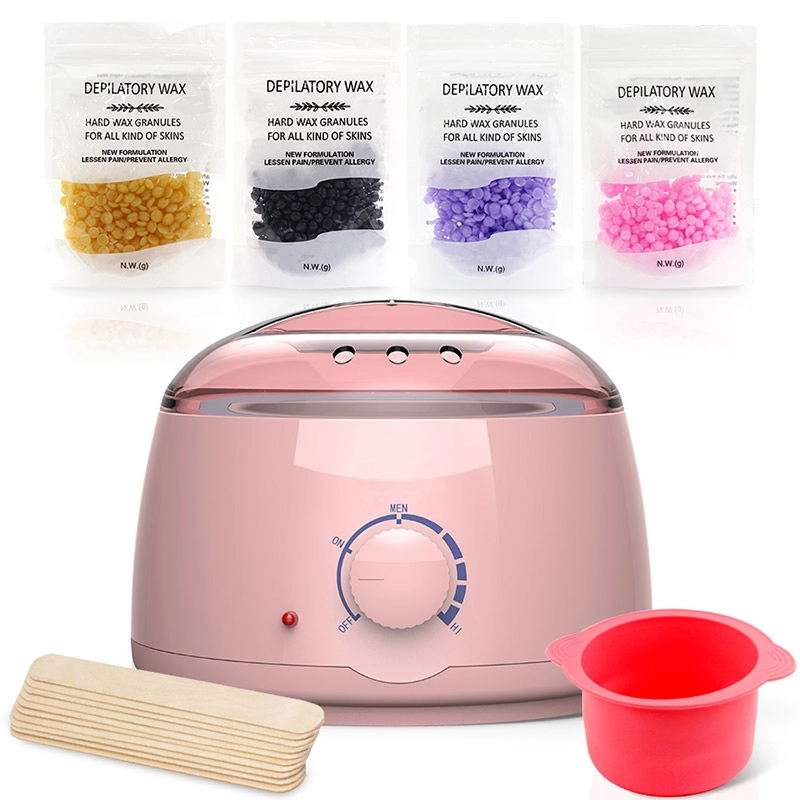
Our LOVECRAZY AX-100 wax heater blends sleek design with robust professional performance, making salon-grade hair removal effortless for multiple body areas at once.
Its 500ml large capacity, rapid 100W heating, consistent temperature control, and multi-wax compatibility (hard beads/blocks) ensure smooth, long-lasting results every session. Whether you’re a home user or a salon professional, its multi-voltage option (220V/US) makes it a reliable solution to elevate your waxing routine.
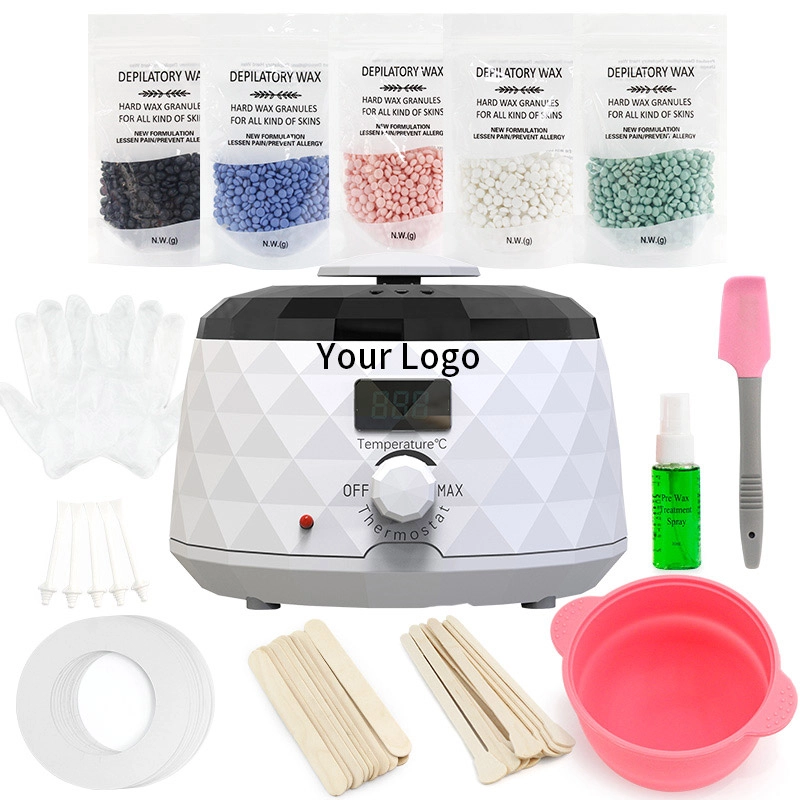
Featuring a sleek geometric diamond-textured exterior (fingerprint-resistant and easy to wipe clean) plus a customizable "Your Logo" area, our AX-258A 500ml PP wax heater blends premium salon aesthetics with brand personalization for B2B clients.
Its built-in digital temperature display enables precise heat control; paired with 120W high-power rapid heating, it melts hard wax beads/blocks in just 15-20 minutes. The adjustable thermostat knob adapts to different hard wax melting points, while the 500ml large capacity supports full-body multi-area hair removal
Unlock Your Custom Quote Now
Fill in your requirements and contact details, and our team will get back to you with full information and a tailored quote.
Expert
Book a free consultation to explore your project needs.
As a premier wax heater manufacturer, LOVE CRAZY delivers top-tier OEM salon beauty equipment and custom manufacturing solutions for global B2B partners.
Contact us at
E-mail: david@lovecrazyhome.com
WhatsApp: +86 189 2777 9907
Tel: +86 0757-85626657/85626627
Address: 4F, Building B, No.18, Yiheng Road, Xiahengtian Industrial Zone,Lishui Town, Nanhai District, Foshan, Guangdong, China
 Scan QR Code
Facebook
Instagram
Instagram
Instagram