









What temperature controls are ideal in a wax heater? | Insights by LOVE CRAZY
What temperature range and control resolution should a wax heater provide for different wax types and skin-safe application?
Beginner pain: buyers see single-range specs and don’t know whether a heater will safely melt their wax or deliver skin-safe application temps.
Recommendation (industry practice): provide an adjustable control that covers roughly 40–70°C (104–158°F) with fine resolution. Why those numbers: hard depilatory waxes and salon hard-bead products typically melt and are applied between ~50–60°C (122–140°F). Paraffin therapy for hands often runs 45–52°C (113–126°F). A heater that only reaches 60°C may be fine for most salon hard waxes but will not be optimal if the manufacturer or user needs higher melt temps or faster heating for high-viscosity blends.
Control resolution should be 0.5°C (or 1°F) or better. That resolution lets technicians and formulators dial in a temperature that gives the right viscosity and tack without overshooting to dangerous skin temperatures. For multi-purpose designs (cartridge, pot, paraffin bath), include user-selectable modes or soft-limits so beginner users cannot easily set unsafe temperatures.
How accurate and stable must temperature control be to prevent burns and ensure wax consistency?
Beginner pain: inaccurate or fluctuating temperatures cause burns, poor adhesion to hair, or brittle wax that flakes.
Target accuracy and stability: aim for ±1°C (±1.8°F) accuracy and drift/stability of ±0.5–1°C during steady-state operation. In practice, that means when a setpoint of 55°C is selected the actual wax temperature should remain within about 54–56°C under normal load.
Why it matters: wax viscosity is strongly temperature-dependent. A change of 2–3°C can change flow behavior, application thickness, and adhesion to hair or skin. For skin safety, even small overshoots above the recommended application temperature can increase burn risk—particularly on sensitive skin.
Validation approach: manufacturers should provide measured stability curves (temperature vs time at a given setpoint with typical load) and state the measurement method (type of sensor, immersion depth, ambient conditions). Buyers should ask for a thermally representative test report or a certificate showing the ±1°C performance.
Is a PID controller better than a simple mechanical thermostat for salon-grade wax heaters—and what features matter?
Beginner pain: product pages list thermostatic control but beginners don’t know whether that’s enough for consistent results.
Short answer: yes—PID (Proportional–Integral–Derivative) controllers deliver better temperature stability and quicker recovery than simple on/off thermostats for most salon and production needs.
Why PID: PID control minimizes overshoot, reduces steady-state error and maintains temperature with smaller oscillations. For wax, that translates to fewer hot spikes, more consistent viscosity, and safer, repeatable application temperatures.
Practical features to require from a PID-based controller:
- Digital readout with 0.5°C resolution and configurable setpoint.
- Auto-tune or factory-tuned PID parameters for the heater tank size and heater wattage.
- Low hysteresis (±0.5–1°C) and fast recovery after the lid is opened or wax is dispensed.
- Safety interlocks and keypad lock to prevent accidental setpoint changes.
When to accept a mechanical thermostat: for low-cost, small-volume home warmers a calibrated bimetal thermostat may be sufficient, but expect wider temperature swing (±3–5°C) and longer recovery times.
Which temperature sensor type and placement deliver the most reliable readings in a wax pot, and how should calibration be handled?
Beginner pain: sensors mounted in the wrong spot or low-quality sensors create inconsistent readings and misleading setpoints.
Sensor types: the industry commonly uses three sensor technologies in heaters:
- NTC thermistors — low cost, good sensitivity in the 0–100°C range (accuracy typically ±0.5–1°C).
- PT100/PT1000 RTDs — higher accuracy (±0.1–0.3°C) and better long-term stability, preferred in higher-end salon or lab equipment.
- Thermocouples — used when a wide temperature range or very fast response is required, but less common for mid-range wax heaters because they are less accurate at low temps.
Recommended placement: the sensor should be immersed in a protective sheath and positioned in the bulk wax near the geometric center and at typical melt depth—not at the tank wall or directly against a heating element. Wall-mounted sensors over-read because they see hotter metal; bottom-adjacent sensors can read too cool if isolated by sludge or trapped air.
Calibration and maintenance: provide or request a calibration certificate (traceable to an accredited reference) or allow the user to calibrate against a reference thermometer (digital RTD probe). Recommend re-checking calibration every 6–12 months in a commercial setting. Manufacturers should document sensor type, sheath material, and recommended recalibration interval.
What safety controls and certifications should I require from wax heater manufacturers to protect users and meet regulatory expectations?
Beginner pain: online marketplaces list heaters without clear safety features or certification, exposing salons to liability.
Essential safety features:
- Over-temperature protection: a secondary independent over-temperature cutoff (thermal fuse or mechanical thermal cutoff) that triggers above the user-set range—typical lockout set at 5–10°C above maximum displayable setpoint.
- Ground-fault protection and proper grounding, especially for paraffin baths that contact skin.
- Automatic shutoff or alarm if sensor fails or reads open circuit.
- Child- or tamper-lock on digital controls to prevent accidental setpoint changes.
- Robust enclosure and insulation to keep exterior surfaces cool (surface temperatures below regulatory thresholds during operation).
Certifications and documentation: require CE for EU markets and UL/ETL (or equivalent national safety marks) for North America. Ask for a test report showing compliance with electrical safety and thermal safety standards and product markings on the unit. For commercial salon equipment, request an IP rating for spill protection and documentation of electromagnetic compatibility (EMC) if used in proximity to sensitive equipment.
How do wattage, tank geometry and thermal insulation affect heating time, temperature uniformity and energy consumption for production-scale wax heaters?
Beginner pain: buyers assume higher wattage is always better; they end up with uneven melting, long heat times or high energy bills.
Key relationships:
- Wattage vs volume: heating power should scale with wax volume. As a practical guideline, small pots (0.5–1 L) commonly use 150–400 W; mid-size salon pots (1–3 L) typically use 400–1000 W; large commercial tanks (5 L+) often use 1000–2000+ W. These are approximate; heating time also depends on insulation and element placement.
- Element placement and immersion: elements immersed or distributed under the tank floor produce faster and more uniform heat than a single underside plate. Low watt-density designs reduce hotspots that can char wax.
- Tank geometry and stirring: wider, shallower tanks heat and recover faster than very deep narrow pots for the same volume, and they disperse heat more uniformly. Consider internal circulation or stirrers for large production units to maintain uniform temperature.
- Insulation and lid design: quality thermal insulation reduces standby energy consumption and improves temperature stability when you open and close the lid. Magnetic or gasketed lids reduce heat loss during active use.
Performance metrics to request from manufacturers: warming time to melt a specified mass of a typical wax (e.g., X grams of hard wax beads from 20°C to 55°C), recovery time after dispensing 50 g, and steady-state power draw at different setpoints. These real performance numbers (not just wattage) let you compare equipment effectively.
For purchase decisions, balance desired speed (wattage), uniformity (tank design and element distribution), and long-term energy cost (insulation and PID efficiency). Ask the manufacturer to provide measured melting curves and energy consumption data for the product model and tank size you’ll buy.
Conclusion: adopting precise temperature controls—digital PID with fine resolution, accurate sensors properly placed and protected, and independent over-temperature safety—gives manufacturers and buyers consistent wax performance, safer skin application, lower liability, and better energy efficiency. For product selection, insist on performance data (melting times, steady-state stability ±1°C), safety certifications (CE/UL/ETL), and clear calibration instructions.
If you need model recommendations, custom heater design or a quote for production-grade wax heaters with PID control, sensor calibration and full safety features, contact us at www.lovecrazyhome.com or email lovecrazyStella@aliyun.com for a tailored proposal.
FAQ
AX-700
Does AX-700 have a heat preservation function?
Yes, it can maintain a stable temperature after wax melting, ensuring a good hair removal experience.
AX-100
What’s the MOQ for LOVECRAZY AX-100 bulk orders?
The MOQ for AX-100 is 300 units; long-term partners can get flexible adjustments based on order volume.
AX-350
Do you provide samples for B-end bulk ordering of AX-350?
Yes, paid samples are available; sample fees are refundable on bulk orders.
AX-500A
How to use AX-500A’s handle-equipped transparent lid?
Lift safely via the handle; monitor wax status in real time without opening.
AX-911
What is the MOQ for AX-911 bulk orders?
The MOQ is 100 unit.
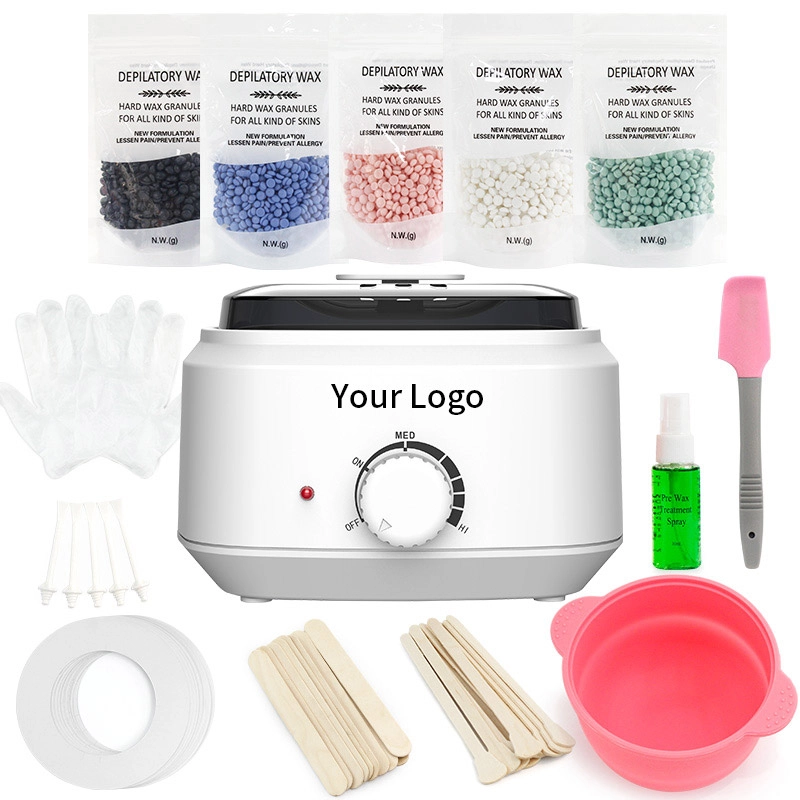
AX-200 500ml PP wax heater blends durable, high-quality material with salon-grade performance, making full-body multi-area hair removal seamless.
Its 100W fast heating, hard wax compatibility (beads/blocks), 100-220V global voltage, and multi-color options suit salons, home users, and cross-border wholesale for face/eyebrows/body use.
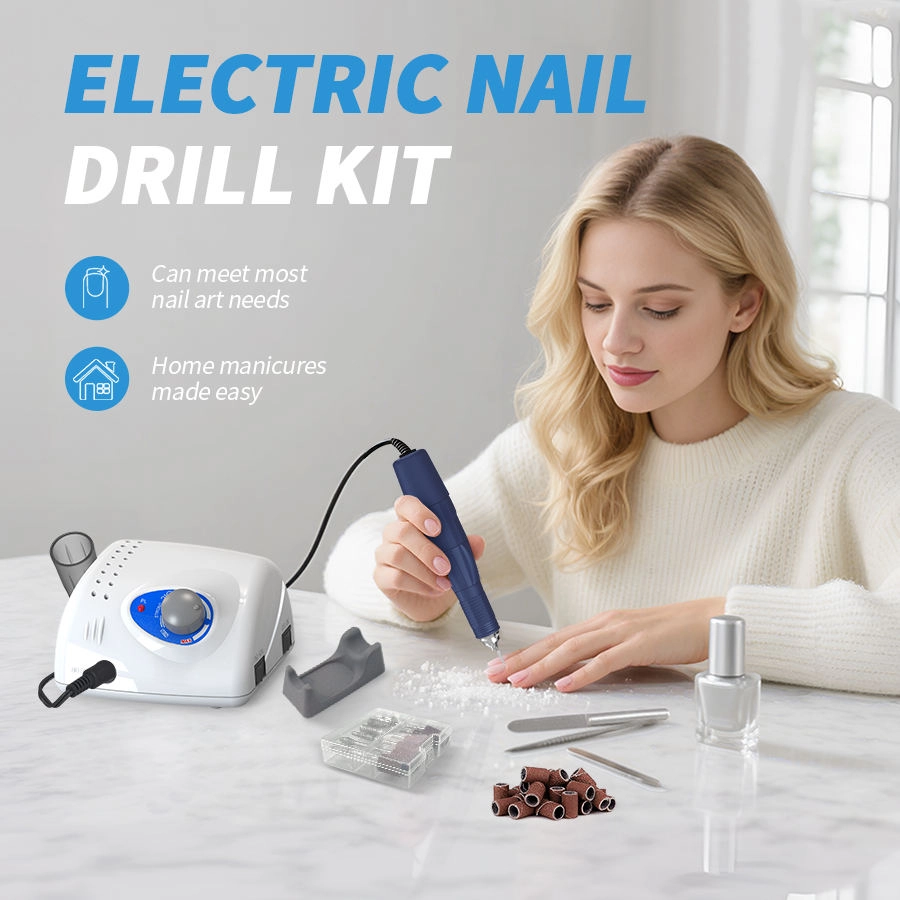
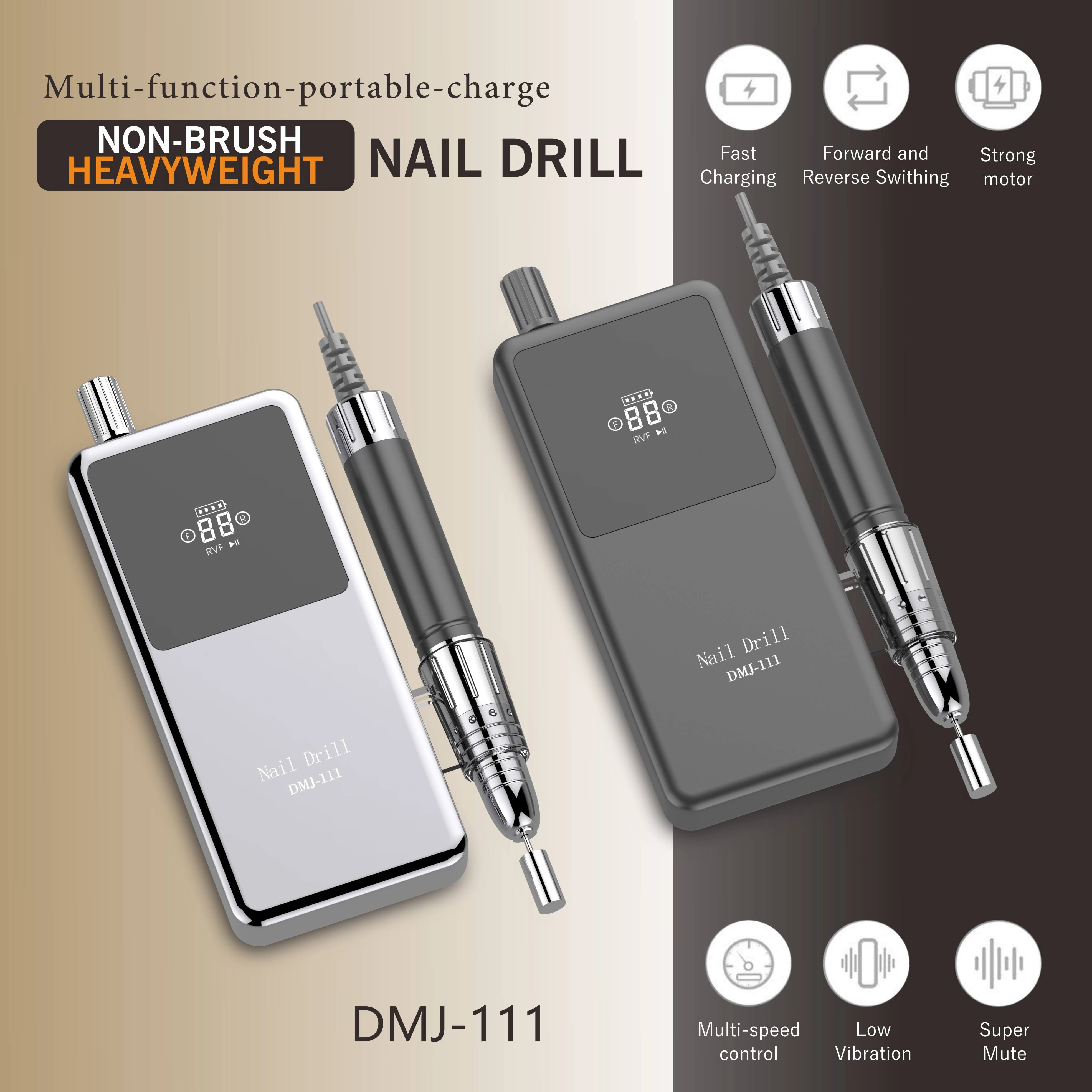
The DMJ-111 cordless rechargeable nail drill from LOVE CRAZY delivers salon-grade precision and performance in an ultra-slim, premium stainless steel body. As a leading Foshan-based beauty equipment manufacturer with 14+ years of industry experience, we designed this model for both fixed salon use and on-the-go mobile services, with stable 35000 RPM high-speed performance, long-lasting battery life, and durable build. We also provide full OEM/ODM solutions for global B2B beauty brands, salon chains, distributors, and wholesalers.
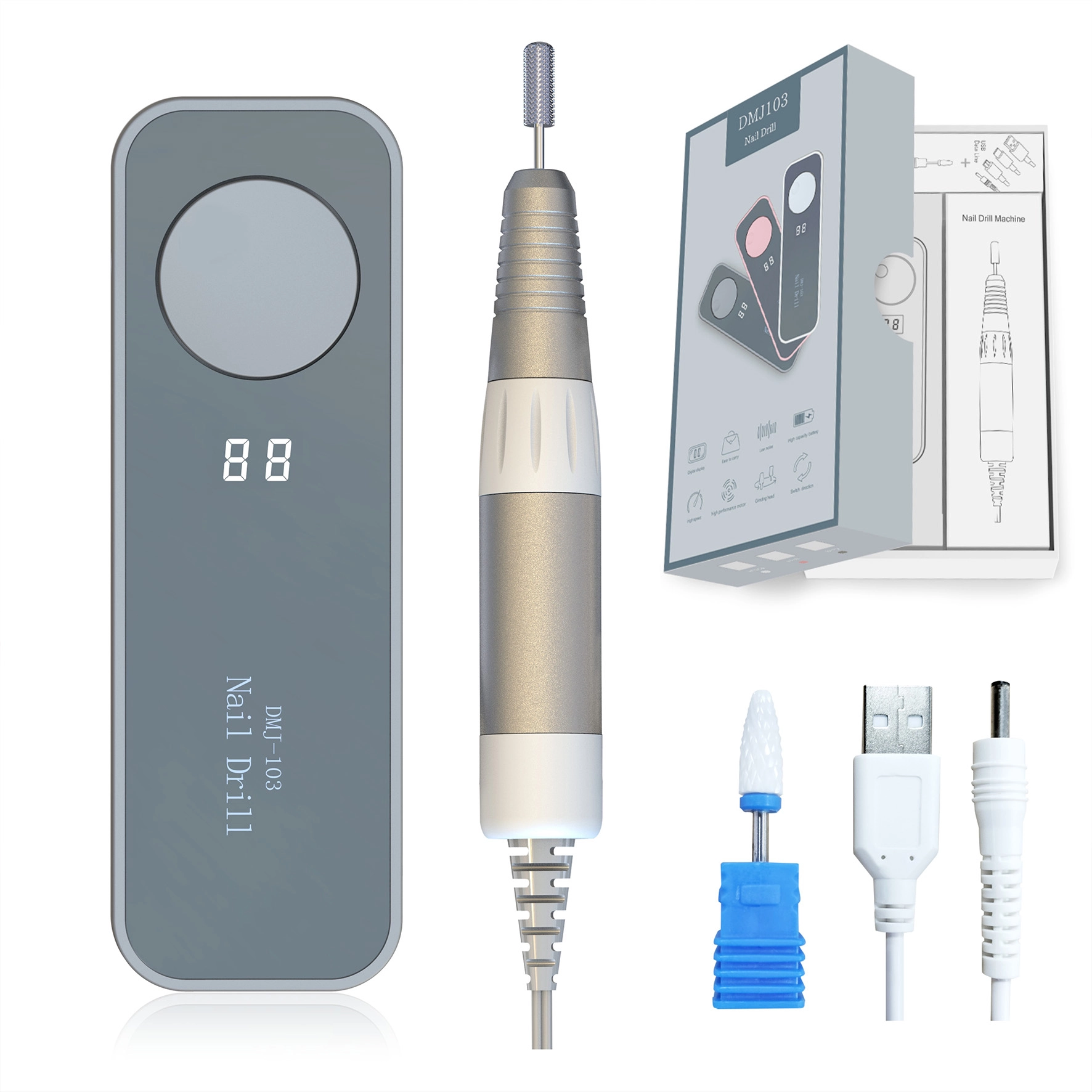
Equipped with a high-performance motor delivering up to 35000 RPM adjustable speed, this nail drill provides consistent, smooth power for all professional nail services — including gel polish removal, nail shaping, cuticle care, and acrylic nail work. The clear digital display ensures precise speed control, allowing nail technicians to deliver uniform, high-quality results for every client even during busy salon hours.
As a premier wax heater manufacturer, LOVE CRAZY delivers top-tier OEM salon beauty equipment and custom manufacturing solutions for global B2B partners.
Contact us at
E-mail: lovecrazyStella@aliyun.com
WhatsApp: +86 189 2777 9907
Tel: +86 0757-85626657/85626627
Address: 4F, Building B, No.18, Yiheng Road, Xiahengtian Industrial Zone,Lishui Town, Nanhai District, Foshan, Guangdong, China
 Scan QR Code
Facebook
Instagram
Instagram
Instagram